
Inclusion and Diversity in Education: Supporting Children with Disabilities and Special Educational Needs through Digital Tools
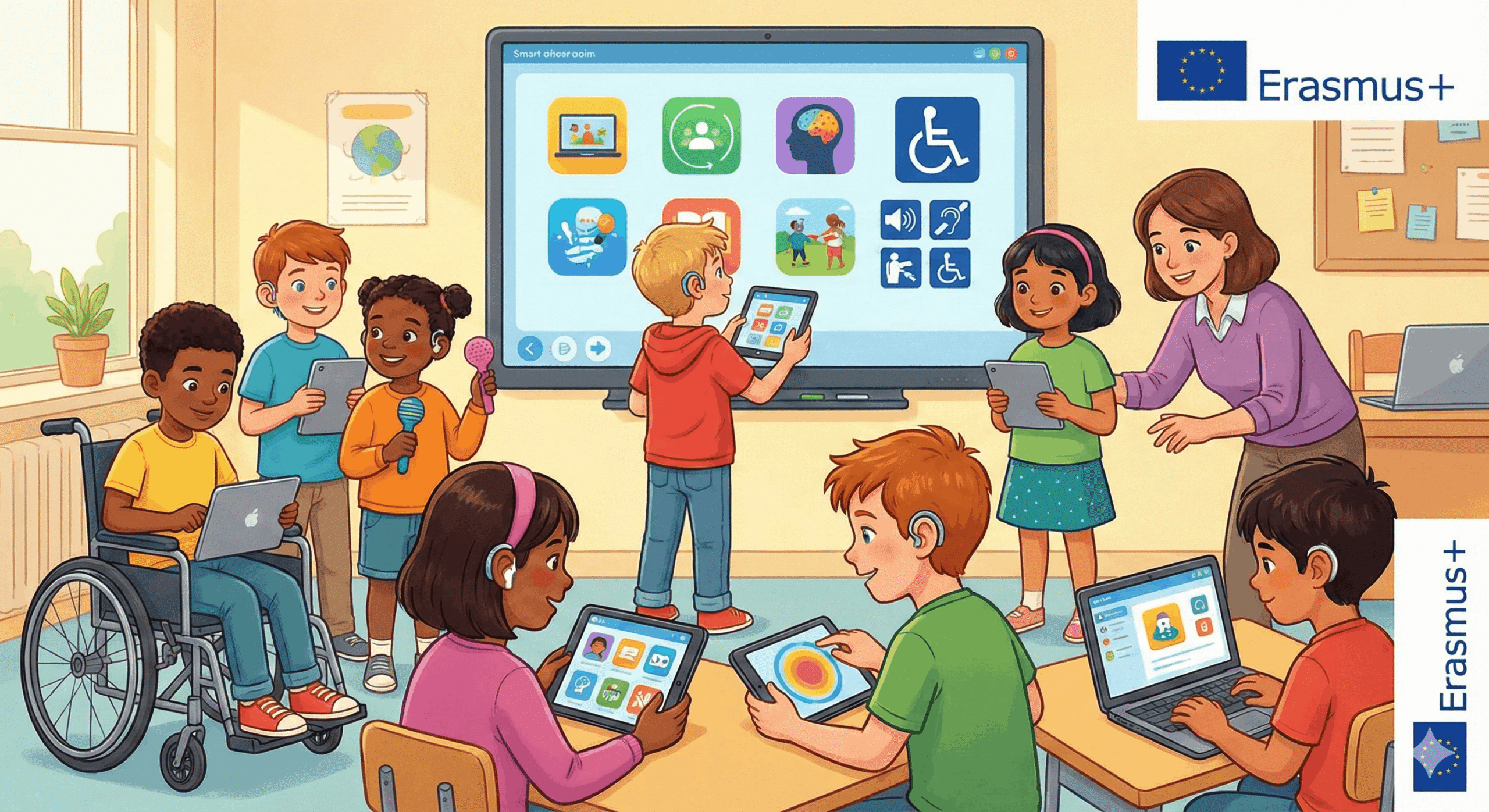
This course focuses on supporting children with disabilities and special educational needs (SEN) through the effective use of digital tools. It offers a comprehensive perspective on inclusion, diversity, and Universal Design for Learning (UDL) principles. Participants will explore various assistive technologies, learn how to create inclusive online and blended learning environments, and develop individualized support strategies. By using digital platforms responsibly, educators can build a truly accessible and inclusive educational space for all students.
Learning Outcomes:
All the participants will:
- Understand inclusion and diversity from a rights-based perspective
- Support children with disabilities and SEN more effectively
- Use digital tools and assistive technologies inclusively
- Design accessible and inclusive learning environments
- Transfer learning into their schools sustainably
Objectives of the Course:
– identifying the barriers faced by children with disabilities in mainstream education
– providing strategies for differentiated instruction and inclusive classroom management
– focusing on the principles of Universal Design for Learning (UDL)
– discussing digital inclusion, its opportunities, and risks
– exemplifying the use of assistive technologies for various learning difficulties and physical disabilities
– designing accessible digital activities and assessments
– focusing on cooperation with parents and stakeholders through digital means
Methodology:
– Underlining the pedagogical approach to inclusive education
– Focusing on a mix of theoretical and practical knowledge
– Creating inclusive action plans and individualized support strategies
– Using digital tools and platforms through hands-on workshops
– Completing scenario-based problem-solving tasks
– Brainstorming, sharing best practices, and peer feedback
Target Group:
– Teachers, special educators, school leaders, support staff
Preparation:
Before the course,
– A detailed pre-course questionnaire to indicate their level of experience, teaching backgrounds, and training will be completed by participants.
– They will also prepare a presentation to reflect their current inclusive practices or challenges.
Validation:
– A course participation certificate will be given to all participants.
– A Europass Mobility Certificate will be given if the participant demands it, as well.
DAILY SCHEDULE
1st Day – Understanding Inclusion, Diversity & SEN
- Inclusion vs. integration vs. segregation
- Diversity in schools: disability, SEN, cultural and socio-economic backgrounds
- Overview of Special Educational Needs (SEN) and disability types
- EU & Erasmus+ priorities on inclusion and diversity
- Barriers faced by children with disabilities in mainstream education
Activities:
✔️ Ice-breakers & expectation mapping
✔️ Case study discussions
✔️ Inclusive classroom reflection
2nd Day – Inclusive Pedagogies & Universal Design for Learning (UDL)
- Principles of Universal Design for Learning (UDL)
- Differentiated instruction for SEN students
- Inclusive classroom management
- Individualized support strategies (IEPs, learning adaptations)
- Role of teachers, families, and support staff
Activities:
✔️ Group work on lesson adaptation
✔️ Inclusive lesson planning workshop
✔️ Peer feedback
3rd Day – Digitalization & Assistive Technologies
- Digital inclusion: opportunities and risks
- Assistive technologies for disabilities and SEN
- Digital tools for:
- Learning difficulties
- Physical disabilities
- Autism spectrum
- Attention and behavioral challenges
- Accessibility in digital content (visual, audio, cognitive access)
Activities:
✔️ Hands-on digital tools workshop
✔️ App & platform testing
✔️ Designing accessible digital activities
4th day – Inclusive Digital Learning Environments
- Creating inclusive online and blended learning environments
- Using AI and digital platforms responsibly in SEN education
- Inclusive assessment methods
- Safe and ethical use of digital tools
- Cooperation with parents and stakeholders through digital means
Activities:
✔️ Scenario-based problem solving
✔️ Group project: Inclusive digital lesson design
✔️ Best practice sharing from participants
5th day – Implementation, Impact & Erasmus+ Dimension
- Developing an Inclusive Action Plan for schools
- Monitoring progress and impact on learners
- Inclusion, diversity & well-being connection
- Erasmus+ follow-up activities and dissemination
- Course evaluation & certification
Activities:
✔️ School-based action plan preparation
✔️ Reflection circle
✔️ Youthpass / Europass & certificates
Instructor
Locations & Dates

