
Preschool Philosophies for Kindergartens
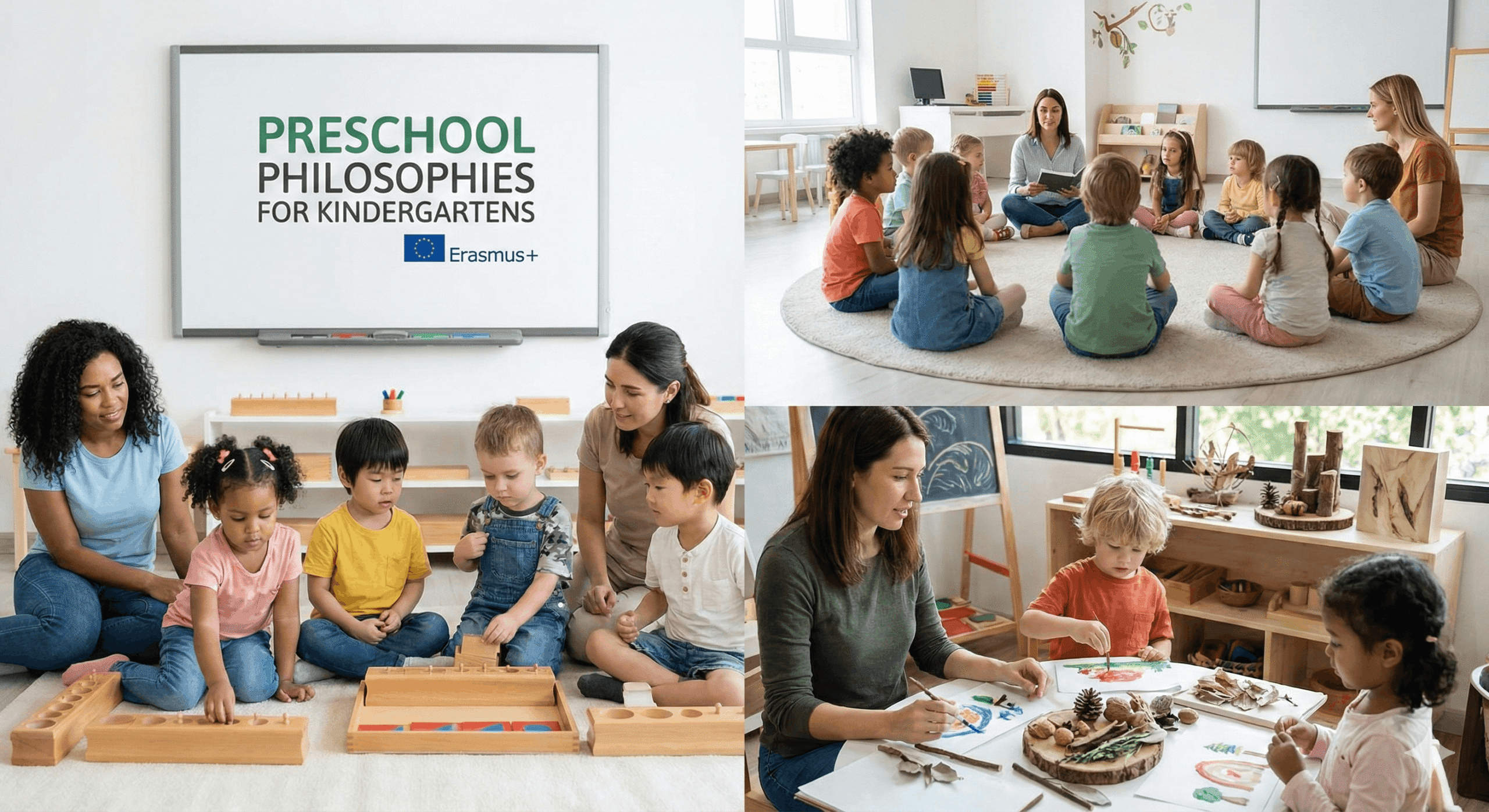
This course provides a comprehensive overview of the most influential and innovative preschool philosophies used worldwide. Participants will explore the core principles of the Montessori, Reggio Emilia, Waldorf, and Forest School approaches. By examining these methodologies, educators will learn how to design child-centered learning environments, foster holistic development, and integrate the best practices of these philosophies into their own modern kindergarten settings to meet the diverse needs of young learners.
Learning Outcomes:
All the participants will:
- Understand the core principles and historical contexts of major early childhood philosophies
- Compare different pedagogical approaches and their benefits for early development
- Adapt elements of various philosophies to fit their own cultural and educational context
- Design engaging, child-centered, and stimulating learning environments
- Foster independence, creativity, and a connection to nature in young learners
Objectives of the Course:
- İdentifying the foundational theories shaping modern early childhood education
- Focusing on the role of the educator in different philosophies (e.g., as a guide, observer, or co-learner)
- Providing practical strategies for implementing montessori concepts and fostering independence
- Discussing the reggio emilia approach, specifically the environment as the “third teacher”
- Exemplifying waldorf’s focus on rhythm, imagination, and holistic learning
- Exploring forest school principles, outdoor play-based learning, and calculated risk-taking
- Designing integrated curricula that draw from multiple pedagogical strengths
Methodology:
- Underlining the pedagogical approach through theoretical overviews and comparative analysis
- Focusing on a mix of theoretical knowledge and practical, hands-on workshops
- Designing ideal classroom layouts and creating sensory learning materials
- Completing group discussions, role-plays, and case study analysis
- Brainstorming and sharing best practices from participants’ home countries
- Developing personalized action plans for classroom implementation
Target Group:
– Pre-school teachers, kindergarten educators, early childhood center directors, pedagogy students, and support staff
Preparation:
Before the course,
- A detailed pre-course questionnaire to indicate their level of experience, teaching backgrounds, and training will be completed by participants.
- They will also prepare a short presentation with photos or videos to reflect their current kindergarten setting and educational approach.
Validation:
- A course participation certificate will be given to all participants.
- A Europass Mobility Certificate will be given if the participant demands it, as well.
DAILY SCHEDULE
1st Day –Introduction & The Montessori Method
- Introduction to Early Childhood Education theories: A historical overview
- The Montessori Method: Core principles and the “Prepared Environment”
- Fostering independence and self-directed learning in young children
- The role of the Montessori educator as a guide and observer
- Adapting Montessori principles to modern classrooms
Activities:
✔️ Ice-breakers & expectation mapping
✔️ Group discussion: Comparing traditional vs. Montessori classrooms
✔️ Practical workshop: Exploring and creating sensory-based learning materials
2nd Day – The Reggio Emilia Approach
- The Reggio Emilia Approach: The image of the child as capable and competent
- The environment as the “Third Teacher”: Designing inspiring classroom spaces
- The “Hundred Languages of Children”: Fostering expression through art and play
- Project-based learning and emergent curriculum in early years
- Pedagogical documentation: Making learning visible
Activities:
✔️ Group activity: Redesigning classroom layouts
✔️ Hands-on art workshop: Provocations with open-ended materials
✔️ Role-play: Documenting a child’s learning process
3rd Day – Waldorf Education
- Waldorf Education: Engaging the head, heart, and hands
- The importance of rhythm, repetition, and routine in early childhood
- Fostering imagination through storytelling, puppetry, and creative play
- Using natural, open-ended materials to stimulate holistic development
- The role of the educator as a role model and facilitator of imaginative play
Activities:
✔️ Rhythm and movement exercises
✔️ Hands-on workshop: Storytelling techniques and crafting with natural materials
✔️ Designing a daily/weekly rhythm chart for a classroom
4th day – Inclusive Digital Learning Environments
- Forest Schools and Nature-Based Learning: The philosophy of outdoor education
- The benefits of nature play for physical, cognitive, and emotional development
- Facilitating safe and calculated risk-taking in outdoor environments
- Fostering environmental stewardship and ecological awareness in preschoolers
- Adapting outdoor learning principles to urban kindergarten settings
Activities:
✔️ Scenario-based group work: Designing an outdoor lesson plan
✔️ Risk-benefit assessment practice
✔️ Nature elements integration workshop
5th day – Integration, Implementation & Erasmus+ Dimension
- Integrating philosophies: Creating a balanced and eclectic early childhood curriculum
- Developing a Personal Action Plan for your kindergarten
- Addressing challenges in implementing new pedagogical approaches
- Erasmus+ follow-up activities, networking, and dissemination
- Course evaluation & certification
Activities:
✔️ School-based action plan preparation
✔️ Reflection circle and sharing of final action plans
✔️ Youthpass / Europass & certificates
Instructor
Locations & Dates
